← Back to the 164-card guide

Cardiology Pharmacology · Visual Companion

Mechanism of Action Atlas

Twenty-four class-based SVG schematics connect molecular targets to bedside physiology. Each map groups drugs that share a pathway while preserving the distinctions that change efficacy, monitoring, or harm.

Target or receptor Downstream effect Inhibition or blockade Physiologic checkpoint

Educational reference, not a protocol. Mechanism diagrams intentionally simplify biology. Use the linked drug cards for indication-specific dosing, COR/LOE, pivotal evidence, interactions, and safety. On a small screen, swipe across a diagram or open its full-size SVG.

00

Follow the mechanism

Two decisions in motion

Follow sodium through successive targets, then follow a safe switch from an ACE inhibitor to an ARNI. These original teaching schematics show sequence, not measured flow or a clinical countdown. Every label remains available when paused and in print.

Why a second nephron target can help

Sequential nephron blockadeA conceptual sequence, not an anatomic drawing. Acetazolamide reduces proximal bicarbonate-coupled sodium reabsorption. Loop drugs block NKCC2 in the thick ascending limb. Thiazides block NCC distally. More sodium delivery downstream can increase potassium loss. Moving dashes show tubular progression, not a measured sodium fraction. 1 · Proximal tubuleAcetazolamide: carbonic anhydraseLess Na–bicarbonate reabsorption 2 · Thick ascending limbLoop drug: NKCC2 blockadeMore sodium reaches later segments 3 · Distal convoluted tubuleThiazide: NCC blockadeLimits compensatory Na reclamation 4 · Collecting system / urineMore distal Na delivery can driveK loss. Reassess volume, BP, renalfunction and Na / K / Mg.
Choose the additional target around the phenotype. This is not an instruction to start all three drugs or a fixed order of prescribing. Verify loop exposure and response before escalating. In ADVOR, acetazolamide added to IV loop therapy improved early decongestion. The trial did not establish a mortality benefit.
Read: Loop diuretics · Sequential blockade · ADVOR primary report.

The ACE inhibitor–ARNI washout

At least 36 hours between an ACE inhibitor and sacubitril valsartanRecord the last ACE inhibitor dose, wait at least 36 hours, then start sacubitril valsartan only after checking eligibility. The same washout applies in the reverse direction. The moving marker illustrates order only, not elapsed time or drug concentrations. 1 · Record the last ACEi doseStop the ACE inhibitor. 2 · Wait at least 36 hoursDo not overlap ACE inhibitionand neprilysin inhibition.Overlap increases angioedema risk. 3 · Start ARNI if eligibleReview BP, kidney function, K,pregnancy and angioedema history. ARNI → ACEi: same ≥36-hour interval.This animation is not a dosing clock.
The washout does not remove angioedema risk. The label contraindicates prior ACEi- or ARB-related angioedema and advises against use in hereditary angioedema. HF guidance advises against ARNI with any angioedema history. No 36-hour interval is mandated for an ARB switch, but stop the separate ARB.
Read: HF foundation · Interaction checks · U.S. prescribing information · 2022 HF guideline.

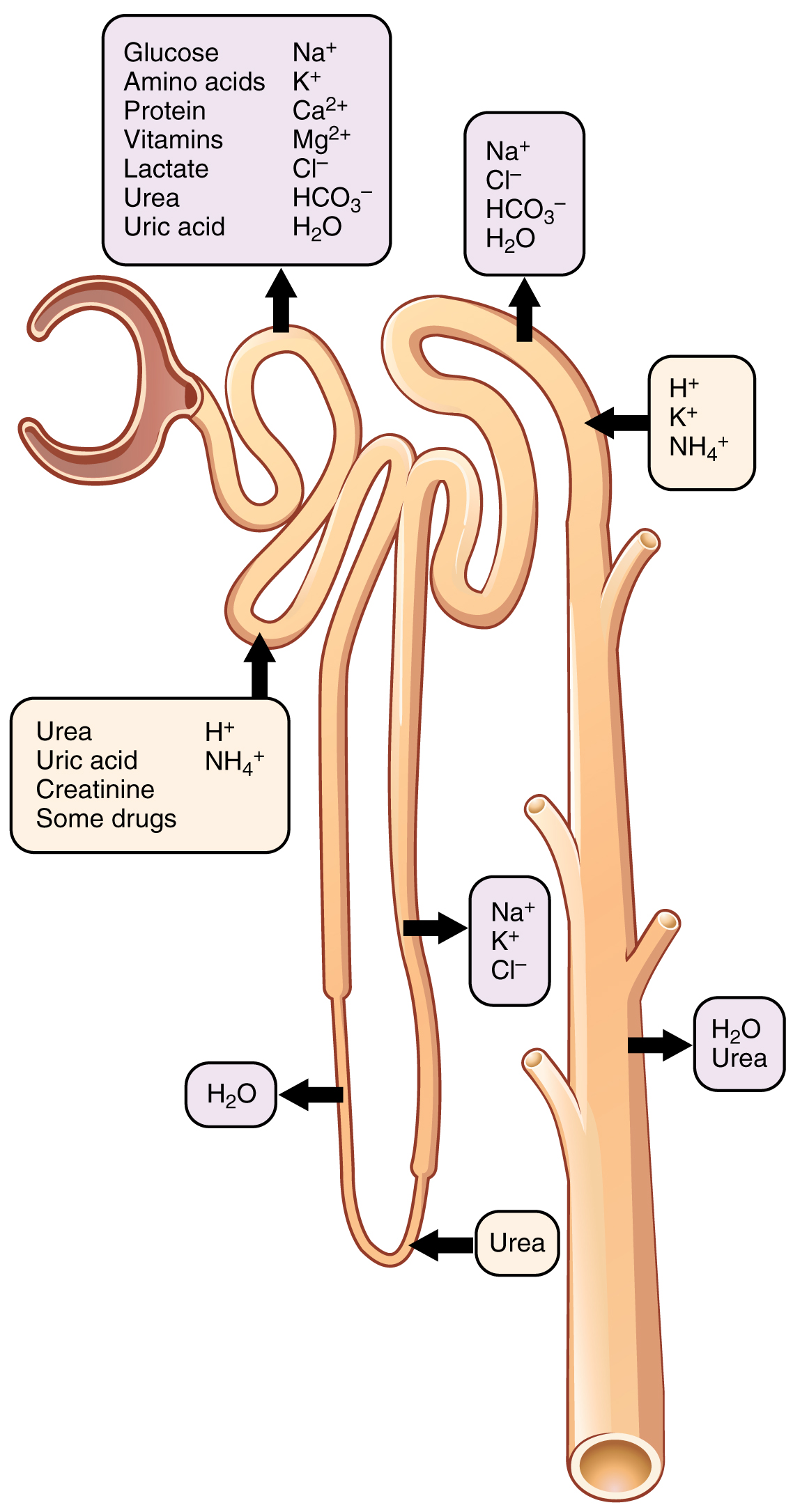
Locate the pathway in the nephron

OpenStax nephron schematic showing proximal secretion and reabsorption, descending-limb water reabsorption, ascending-limb sodium potassium chloride reabsorption, and collecting-system transport.

Reabsorption and secretion point in opposite directions. Arrows leaving the tubule represent reabsorption. Arrows entering it represent secretion. Loop and thiazide drugs act at different transport sites, which explains why their effects and electrolyte hazards can add.

This overview omits cell-level detail. Use the schematic above to connect targets to drug classes. Neither image depicts measured sodium fractions or predicts an individual diuretic response.

OpenStax College, Anatomy & Physiology (2013). 2618 Nephron Secretion Reabsorption. CC BY 3.0. Reproduced without modification. Display size changed.

01

Platelet · coagulation · reperfusion

Thrombosis & ischemia

Antiplatelet pathwaysOpen SVG
Aspirin blocks thromboxane generation, P2Y12 inhibitors block ADP signaling, and GP IIb/IIIa inhibitors block final platelet cross-linking.
Includes: aspirin; clopidogrel, prasugrel, ticagrelor and cangrelor; eptifibatide, tirofiban and abciximab. Drug cards and sources: P3 · P4.
Coagulation anticoagulantsOpen SVG
Antithrombin enhancers, direct thrombin inhibitors, factor Xa inhibitors, and warfarin interrupt distinct points in thrombin and fibrin generation.
Includes: UFH, LMWH and fondaparinux; bivalirudin, argatroban and dabigatran; factor-Xa inhibitors; warfarin. Drug cards and sources: P7 · P8 · P9.
Fibrinolysis & reversalOpen SVG
Thrombolytics convert plasminogen to plasmin, while protamine, vitamin K, factor concentrates, and specific antibody fragments restore hemostasis through different routes.
Includes: alteplase and tenecteplase; protamine; vitamin K and 4F-PCC; idarucizumab and factor-concentrate pathways. Drug cards and sources: P9 · P10 · P11.
Antianginal & vasodilator mechanismsOpen SVG
Organic nitrates use nitric-oxide and cyclic-GMP signaling, ranolazine blocks late sodium current, and direct vasodilators lower preload or afterload through distinct mechanisms.
Includes: organic nitrates, ranolazine, hydralazine, minoxidil and nitroprusside, with preload, afterload and diastolic-tension effects kept distinct. Drug cards and sources: P5 · P18 · P19.
Vascular adjunct pathwaysOpen SVG
Colchicine, cilostazol, pentoxifylline, and vorapaxar act on inflammation, cyclic AMP, blood rheology, and platelet PAR-1 signaling respectively.
Distinguishes: anti-inflammatory, PDE3, hemorheologic and PAR-1 pathways whose indications and outcome evidence are not interchangeable. Drug cards and sources: P6.
02

Neurohormones · channels · nephron

Pressure & heart failure

RAAS pathwaysOpen SVG
Renin, ACE, angiotensin II, AT1 receptors, aldosterone, and mineralocorticoid receptors are shown with the drug classes that interrupt them.
Includes: aliskiren, ACE inhibitors, ARBs, and steroidal or nonsteroidal mineralocorticoid-receptor antagonists. Drug cards and sources: P15 · P16 · P20.
Foundational & resistant BP mechanismsOpen SVG
Thiazide, central sympatholytic, alpha-1, renin, potassium-channel, dopamine-D1, aldosterone-synthase, and endothelin pathways lower blood pressure through distinct targets.
Includes: thiazide and thiazide-like drugs, central sympatholytics, alpha-1 blockers, aliskiren, minoxidil, fenoldopam, baxdrostat and aprocitentan. Drug cards and sources: P17 · P19.
Intravenous BP mechanismsOpen SVG
Hydralazine, nitroprusside, nicardipine, and clevidipine reduce vascular tone through direct relaxation, nitric-oxide signaling, or vascular calcium-channel blockade.
Distinguishes: direct arteriolar relaxation, balanced nitric-oxide vasodilation, and two vascular DHP calcium-channel blockers with different offsets. Drug cards and sources: P18.
Beta blockers & calcium-channel blockersOpen SVG
Beta-receptor blockade and L-type calcium-channel blockade are compared across myocardium, AV node, and vascular smooth muscle.
Distinguishes: β1-selective versus mixed blockade; dihydropyridine vascular effects versus non-DHP nodal and inotropic effects. Drug cards and sources: P12 · P13 · P14.
Diuretics along the nephronOpen SVG
A nephron map locates carbonic-anhydrase inhibitors, loop and thiazide diuretics, ENaC and mineralocorticoid blockade, and vasopressin antagonism.
Includes: acetazolamide, loop and thiazide agents, MRAs, amiloride/triamterene and tolvaptan. Drug cards and sources: P23 · P24.
Electrolyte & water therapiesOpen SVG
Conivaptan produces aquaresis, patiromer and sodium zirconium cyclosilicate remove gastrointestinal potassium, and electrolyte replacement restores ionic gradients.
Distinguishes: free-water removal, gastrointestinal potassium binding, and direct potassium, magnesium or calcium replacement. Drug cards and sources: P25.
Heart-failure disease modificationOpen SVG
ARNI or RAAS blockade, evidence-based beta blockers, spironolactone or eplerenone, and SGLT2 inhibitors converge to reduce heart-failure hospitalization and cardiovascular death.
Includes: the four HFrEF foundations—ARNI or RAAS blockade, metoprolol succinate/carvedilol/bisoprolol, spironolactone/eplerenone and SGLT2 inhibitors—with finerenone explicitly separated. Drug cards and sources: P20 · P21.
Heart-failure adjunct mechanismsOpen SVG
Ivabradine, vericiguat, digoxin, hydralazine with isosorbide dinitrate, intravenous iron, and sotagliflozin act on separate heart-failure pathways.
Includes: If-channel, soluble-guanylate-cyclase, Na/K-ATPase, balanced vasodilator, iron-repletion and dual SGLT mechanisms; these are not interchangeable pillars. Drug cards and sources: P21 · P22.
03

Ion current · adrenergic tone · rescue

Rhythm & critical care

Acute rhythm physiologyOpen SVG
Adenosine, atropine, isoproterenol, and etripamil alter AV-nodal conduction, sinus rate, inotropy, or vascular tone over seconds to minutes.
Includes: A1, M2, beta-adrenergic and non-DHP L-type calcium-channel pathways for short-acting acute rhythm drugs. Drug cards and sources: P26.
Antiarrhythmics & ion channelsOpen SVG
Sodium, beta-adrenergic, potassium and calcium-channel effects are mapped to conduction velocity, refractoriness, automaticity and AV-nodal slowing.
Includes: Vaughan Williams classes I-IV, with sodium-channel kinetics, beta blockade, potassium or multichannel effects, and non-DHP nodal calcium blockade. Drug cards and sources: P27 · P28 · P29.
Vasopressors & inotropesOpen SVG
Alpha-1, beta-1, V1, AT1 and phosphodiesterase-3 pathways connect vasoactive drugs to vascular tone, contractility and heart rate.
Includes: norepinephrine, epinephrine, phenylephrine, vasopressin, dobutamine, milrinone and related rescue pressors. Drug cards and sources: P37 · P38.
Cardiovascular antidotesOpen SVG
Digoxin immune Fab, glucagon, high-dose insulin, calcium, lipid emulsion and vasopressor support are matched to selected cardiovascular poison mechanisms.
Includes: digoxin, beta-blocker and calcium-channel-blocker poisoning pathways; toxicology consultation remains essential. Drug cards and sources: P30.
04

Lipoprotein · metabolism · pulmonary vascular · myocardium

Metabolic & specialty pharmacology

Core lipid-lowering pathwaysOpen SVG
Hepatic cholesterol synthesis, intestinal absorption, LDL-receptor recycling, PCSK9 production and triglyceride-rich lipoproteins are mapped to their drug classes.
Includes: statins, bempedoic acid, ezetimibe, PCSK9 antibodies, inclisiran or enlicitide, fibrates and icosapent ethyl. Drug cards and sources: P31 · P32 · P33 · P35.
Specialty lipid pathwaysOpen SVG
Bile-acid sequestration, niacin, ANGPTL3 inhibition, MTP inhibition, and apoC-III suppression alter LDL or triglyceride-rich lipoproteins through distinct pathways.
Includes: bile-acid sequestrants, niacin, evinacumab, lomitapide, olezarsen and plozasiran, with LDL-receptor independence and outcome limits identified. Drug cards and sources: P34.
Cardiometabolic incretin drugsOpen SVG
GLP-1 and dual GIP with GLP-1 receptor agonism connect pancreatic, appetite, gastrointestinal, weight and cardiometabolic pathways.
Includes: semaglutide, liraglutide, dulaglutide, tirzepatide and orforglipron; outcome claims remain molecule, indication and population specific. Drug cards and sources: P36.
Pulmonary-hypertension pathwaysOpen SVG
Nitric-oxide cGMP, endothelin, prostacyclin and activin-signaling pathways are mapped to the major pulmonary arterial hypertension drug classes.
Includes: PDE5 inhibition and riociguat, endothelin-receptor antagonists, prostacyclin-pathway drugs and sotatercept. Drug cards and sources: P39 · P40.
Hypertrophic cardiomyopathyOpen SVG
Rate slowing, negative inotropy and direct cardiac myosin inhibition reduce dynamic left-ventricular outflow obstruction through different mechanisms.
Includes: nonvasodilating beta blockers, verapamil/diltiazem, disopyramide, mavacamten and aficamten. Drug cards and sources: P41.
ATTR amyloidosisOpen SVG
Transthyretin production, tetramer stabilization, dissociation, misfolding and tissue deposition are mapped to silencers and stabilizers.
Includes: tafamidis and acoramidis stabilization; vutrisiran and other silencers that reduce hepatic TTR production. Drug cards and sources: P42.
Pericardial inflammationOpen SVG
Cyclooxygenase inhibition, colchicine microtubule effects, inflammasome signaling and IL-1 blockade are connected to symptom control and recurrence prevention.
Includes: aspirin or NSAIDs, colchicine, rilonacept and anakinra; etiology-specific immunosuppression sits outside the routine ladder. Drug cards and sources: P43 · P44.