Twenty-four class-based SVG schematics connect molecular targets to bedside physiology. Each map groups drugs that share a pathway while preserving the distinctions that change efficacy, monitoring, or harm.
Target or receptorDownstream effectInhibition or blockadePhysiologic checkpoint
Educational reference, not a protocol. Mechanism diagrams intentionally simplify biology. Use the linked drug cards for indication-specific dosing, COR/LOE, pivotal evidence, interactions, and safety. On a small screen, swipe across a diagram or open its full-size SVG.
00
Follow the mechanism
Two decisions in motion
Follow sodium through successive targets, then follow a safe switch from an ACE inhibitor to an ARNI. These original teaching schematics show sequence, not measured flow or a clinical countdown. Every label remains available when paused and in print.
Why a second nephron target can help
Choose the additional target around the phenotype. This is not an instruction to start all three drugs or a fixed order of prescribing. Verify loop exposure and response before escalating. In ADVOR, acetazolamide added to IV loop therapy improved early decongestion. The trial did not establish a mortality benefit. Read:Loop diuretics · Sequential blockade · ADVOR primary report.
The ACE inhibitor–ARNI washout
The washout does not remove angioedema risk. The label contraindicates prior ACEi- or ARB-related angioedema and advises against use in hereditary angioedema. HF guidance advises against ARNI with any angioedema history. No 36-hour interval is mandated for an ARB switch, but stop the separate ARB. Read:HF foundation · Interaction checks · U.S. prescribing information · 2022 HF guideline.
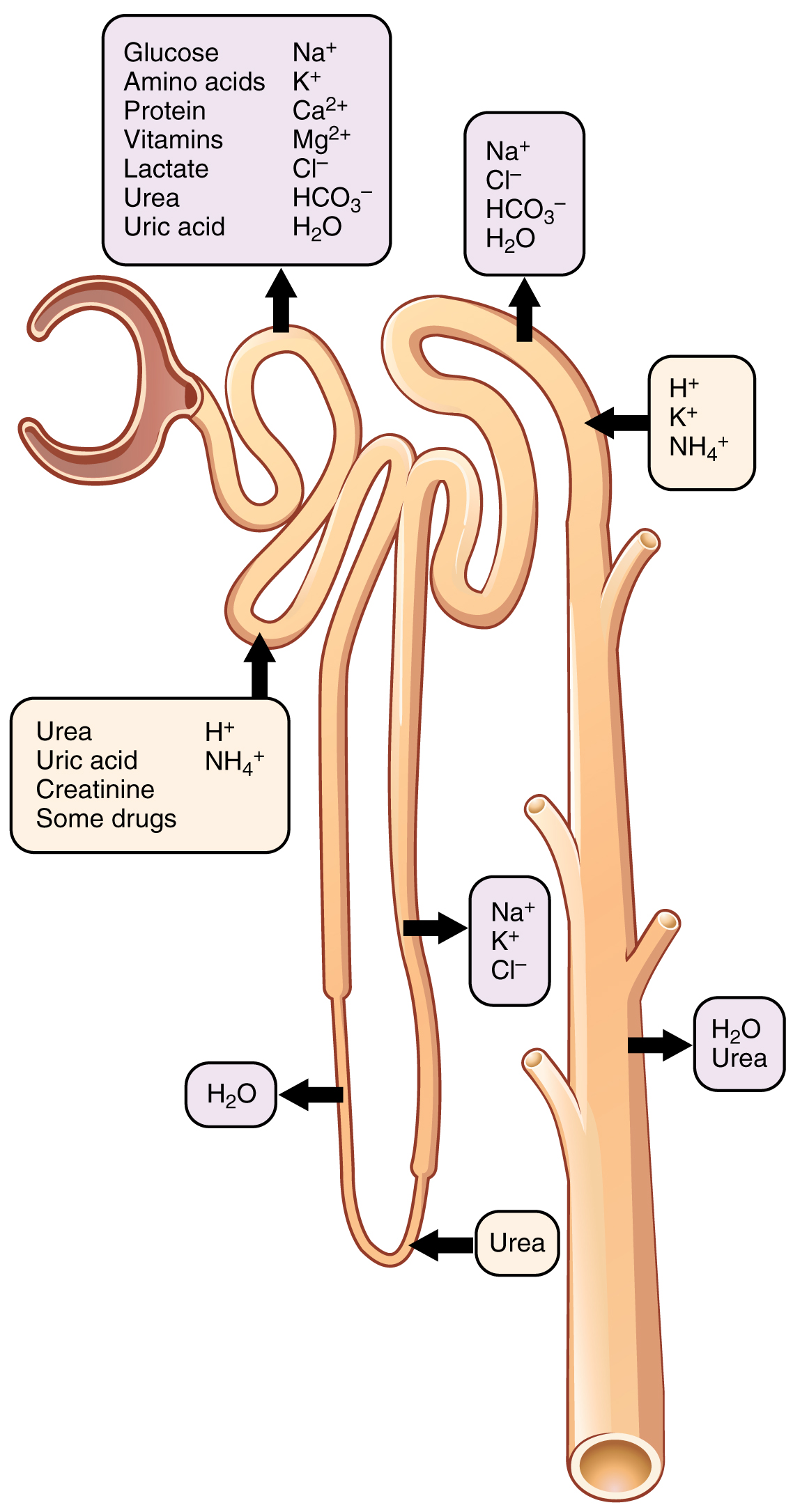
Locate the pathway in the nephron
Reabsorption and secretion point in opposite directions. Arrows leaving the tubule represent reabsorption. Arrows entering it represent secretion. Loop and thiazide drugs act at different transport sites, which explains why their effects and electrolyte hazards can add.
This overview omits cell-level detail. Use the schematic above to connect targets to drug classes. Neither image depicts measured sodium fractions or predicts an individual diuretic response.
Includes: alteplase and tenecteplase; protamine; vitamin K and 4F-PCC; idarucizumab and factor-concentrate pathways. Drug cards and sources:P9 · P10 · P11.
Includes: organic nitrates, ranolazine, hydralazine, minoxidil and nitroprusside, with preload, afterload and diastolic-tension effects kept distinct. Drug cards and sources:P5 · P18 · P19.
Distinguishes: anti-inflammatory, PDE3, hemorheologic and PAR-1 pathways whose indications and outcome evidence are not interchangeable. Drug cards and sources:P6.
Includes: aliskiren, ACE inhibitors, ARBs, and steroidal or nonsteroidal mineralocorticoid-receptor antagonists. Drug cards and sources:P15 · P16 · P20.
Includes: thiazide and thiazide-like drugs, central sympatholytics, alpha-1 blockers, aliskiren, minoxidil, fenoldopam, baxdrostat and aprocitentan. Drug cards and sources:P17 · P19.
Distinguishes: direct arteriolar relaxation, balanced nitric-oxide vasodilation, and two vascular DHP calcium-channel blockers with different offsets. Drug cards and sources:P18.
Distinguishes: β1-selective versus mixed blockade; dihydropyridine vascular effects versus non-DHP nodal and inotropic effects. Drug cards and sources:P12 · P13 · P14.
Distinguishes: free-water removal, gastrointestinal potassium binding, and direct potassium, magnesium or calcium replacement. Drug cards and sources:P25.
Includes: the four HFrEF foundations—ARNI or RAAS blockade, metoprolol succinate/carvedilol/bisoprolol, spironolactone/eplerenone and SGLT2 inhibitors—with finerenone explicitly separated. Drug cards and sources:P20 · P21.
Includes: If-channel, soluble-guanylate-cyclase, Na/K-ATPase, balanced vasodilator, iron-repletion and dual SGLT mechanisms; these are not interchangeable pillars. Drug cards and sources:P21 · P22.
Includes: Vaughan Williams classes I-IV, with sodium-channel kinetics, beta blockade, potassium or multichannel effects, and non-DHP nodal calcium blockade. Drug cards and sources:P27 · P28 · P29.
Includes: norepinephrine, epinephrine, phenylephrine, vasopressin, dobutamine, milrinone and related rescue pressors. Drug cards and sources:P37 · P38.
Includes: bile-acid sequestrants, niacin, evinacumab, lomitapide, olezarsen and plozasiran, with LDL-receptor independence and outcome limits identified. Drug cards and sources:P34.
Includes: semaglutide, liraglutide, dulaglutide, tirzepatide and orforglipron; outcome claims remain molecule, indication and population specific. Drug cards and sources:P36.
Includes: PDE5 inhibition and riociguat, endothelin-receptor antagonists, prostacyclin-pathway drugs and sotatercept. Drug cards and sources:P39 · P40.
Includes: aspirin or NSAIDs, colchicine, rilonacept and anakinra; etiology-specific immunosuppression sits outside the routine ladder. Drug cards and sources:P43 · P44.